Recover.Recycle.Restore.
Radically reducing the cost and environmental impact of
Subsea Decommissioning
Our Impact
Aligned with the UN Sustainable Development Goals
Restore Subsea supports the Sustainable Development Goals.
Advancing patented engineering on a DNV qualification pathway
Recovering steel and materials for recycling

Lowering lifecycle emissions with X-Lay™
Reducing long-term seabed liabilities and residual contaminants
The Decommissioning
Challenge
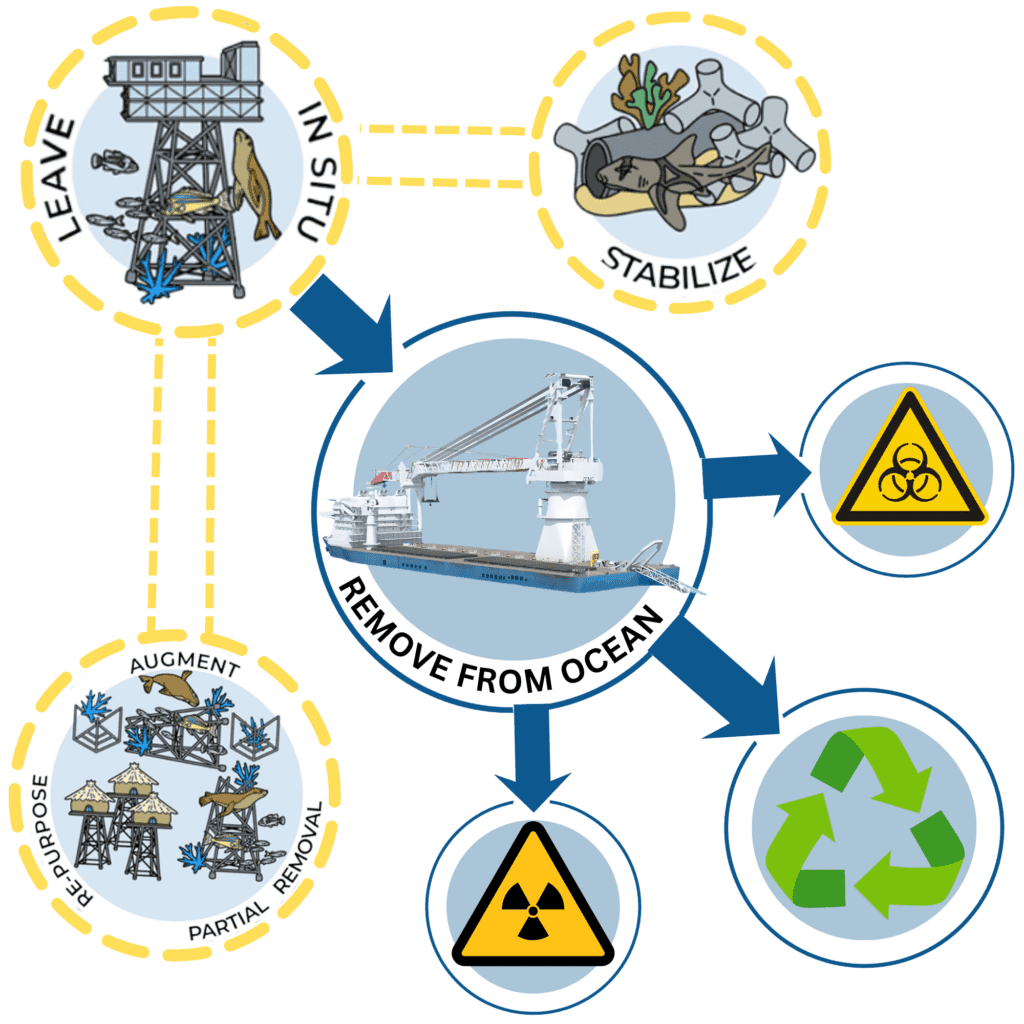
Global subsea infrastructure is entering large-scale decommissioning. The total subsea pipeline network is >150,000km long. Removal from the ocean is the only pathway that eliminates biohazards and enables recycling, but traditional removal solutions are very expensive and taxpayers fund up to 70% of these costs.
The Market Shift
Regulators are moving to full removal
Lower cost removal benefits Energy Operators, Contractors and Governments.
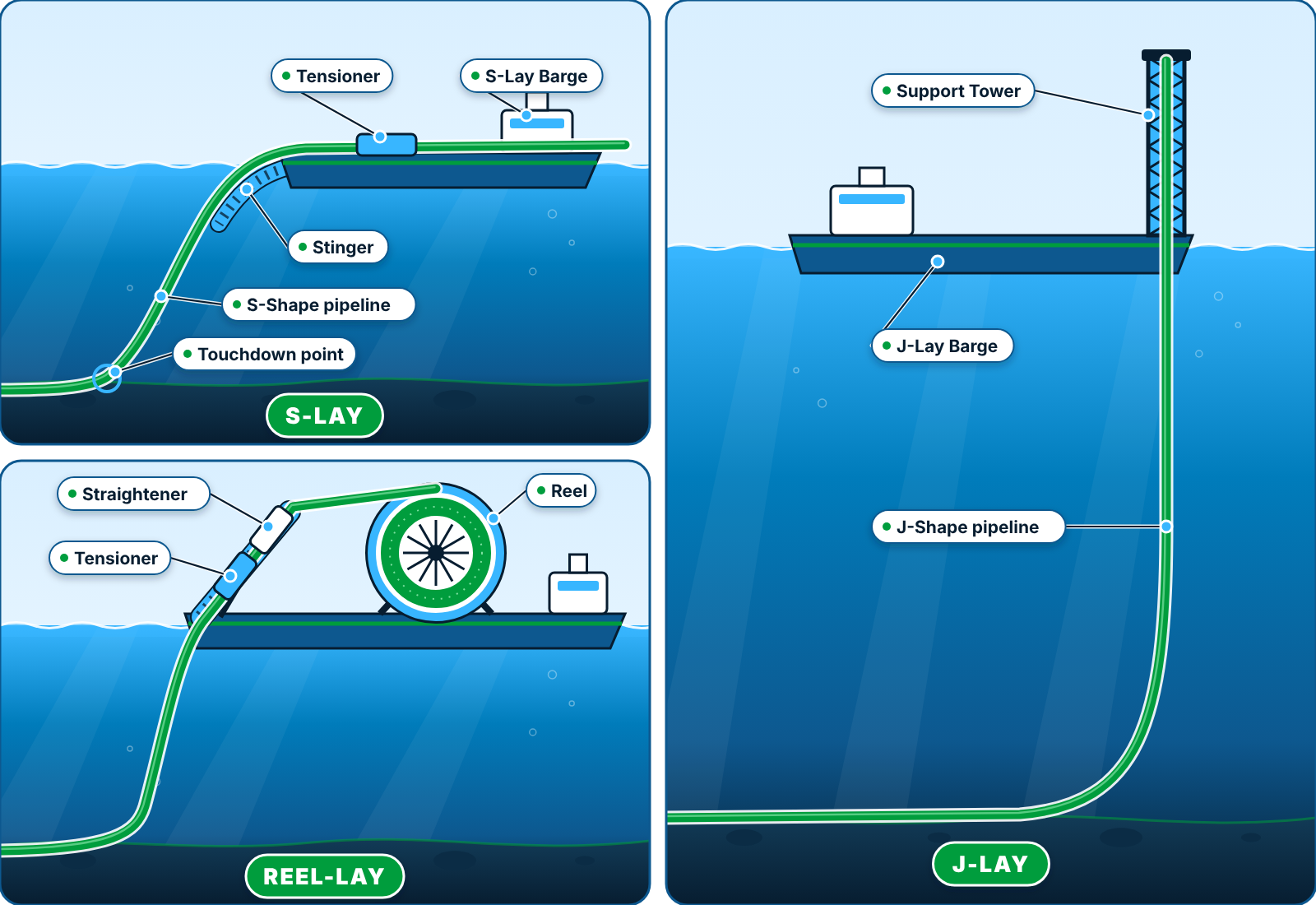
Traditional pipeline removal solutions involve either the reverse of the original method as per above or subsea cut and lift. These methods are capital-heavy and productivity constrained.
Globally, regulators are shifting toward greater removal of all subsea infrastructure, including rigid steel pipelines. In Thailand and Australia complete removal is now the base case, together with a tightening of financial assurance. In Europe OSPAR 98/3 already creates a strong removal bias and the UK regulator’s draft guidance reinforces a presumption in favour of full removal.
The overall trend is clear: regulators are demanding stronger justification for leaving offshore infrastructure behind, while advances in recovery technology could change what is technically and economically achievable.
The Centre of Offshore Decommissioning Australia is forecasting that >1,200 km of rigid subsea pipelines will require complete removal in circa 2030. The Department of Industry, Science and Resources is forecasting this will cost A$2.7M / km or > A$3.2 B. Australian taxpayers will currently contribute up to 40% of these costs.
Offshore Energies UK is forecasting >3,000 km of rigid subsea pipelines will be decommissioned from 2025 to 2034. This is split between the Netherlands (46%), UK (28%) & Norway (26%). UK taxpayers will currently contribute up to 70% of future costs.
The case for investing in the development of alternative lower cost removal solutions is an increasingly attractive proposition for Energy Operators, Contractors and Governments.
X-Lay™: A New Solution For Rigid Pipeline Removal
A new approach designed to materially reduce vessel time, cost, risk and environmental impact.
Progressing Toward Commercial Deployment of X-Lay™
- 2020
Technology
Demonstrator - Q4 2025
Seed - Now
Commercial
Demonstrator - Q1 2027
Series A Raise - Q2 2027
DNV Technology Qualified - Q3 2027
Series B Raise - Next
Support licensed contractors, to bid & deliver their global projects.
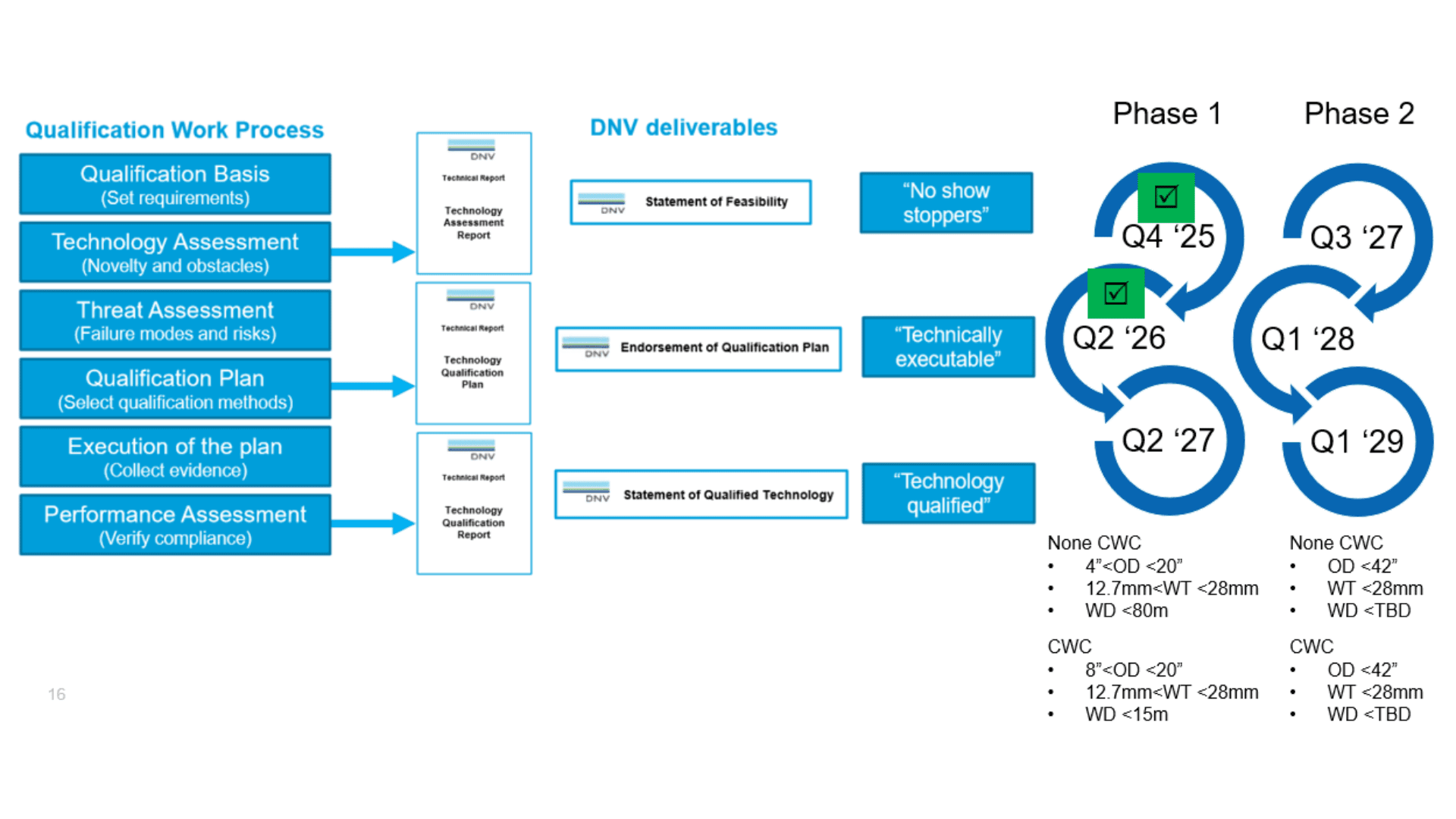
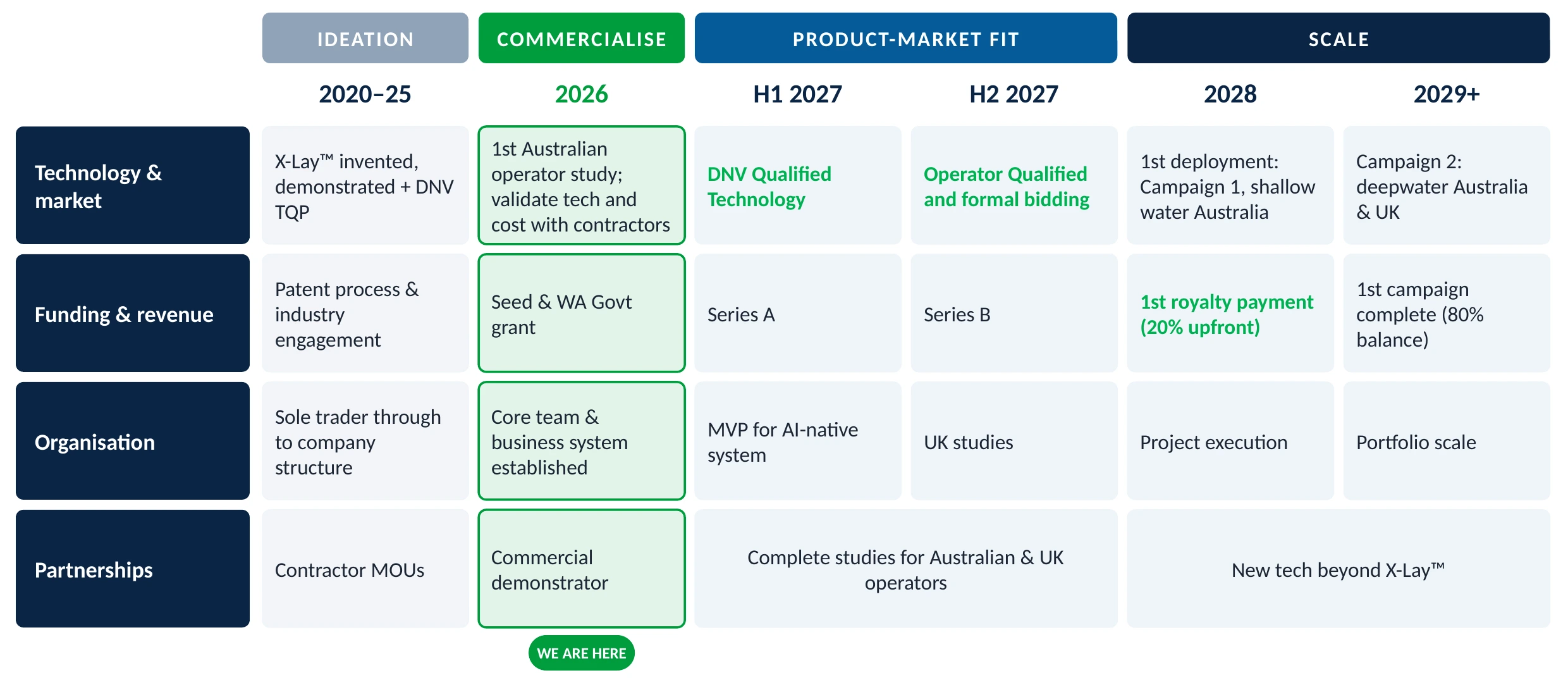
We commenced our “Technology Demonstrator Phase” for X-Lay™ technology in 2020 and are currently progressing our “Commercial Demonstrator Phase”.
This involves patent protection, independent technology qualification via DNV-RP-A203, further R&D, engineering, and potential pipeline bend analysis/testing, all crucial for our efforts to pre-qualify and commercialise X-Lay™. Through 2026 we have commenced receiving Australian Government Grant funding and commenced feasibility studies for Australian Energy Operators.
We plan to be DNV “Technology Qualified” by Q2 2027 and our Series A & B raises in 2027 will enable us to a) pre-qualify our proprietary X-Lay™ offerings & b) support licensed Contractors with bidding for & delivering subsea pipeline removal projects globally.
We will also continue strengthening our niche-focused IP wrt advanced pipeline strain management, plus further R&D and lab testing of various pipeline types, coatings and sizes.
Let’s Transform Subsea Decommissioning - Together
Partner with Restore Subsea to explore cleaner, smarter, and more commercially sustainable approaches to offshore infrastructure removal.